
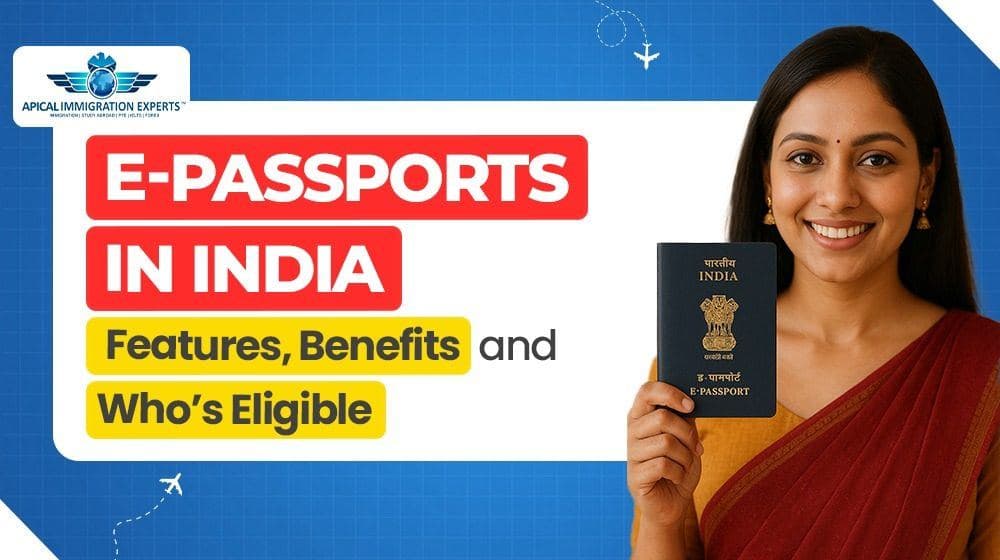
India has taken a big step toward modernizing its passport system with the launch of e-passports. This new, chip-based document ensures faster immigration checks, stronger security, and a smoother travel experience. The project is part of the Ministry of External Affairs’ Passport Seva Programme 2.0, aligning India with international travel standards followed by countries like the US, UK, and Singapore.
What is an E-Passport?
An e-passport looks similar to a regular Indian passport. The main difference lies in a secure electronic chip embedded in its back cover. This chip stores the holder’s personal and biometric data safely, making it more secure and reliable than the traditional version.
It stores:
Personal details such as name, date of birth, and passport number
Biometric data including fingerprints and facial recognition information
A digital signature to confirm identity
The chip uses Radio-Frequency Identification (RFID) technology. This ensures that the data printed on the passport matches the information stored electronically. As a result, forgery or tampering becomes nearly impossible.
You can recognize an e-passport by a small gold rectangle on its cover — a universal symbol for electronic passports. At airports with automated e-gates, e-passports can be scanned within seconds. This allows travelers to clear immigration faster and avoid long queues.
How to Apply for an E-Passport
Applying for an e-passport is simple. The process is the same as applying for a traditional passport. You can do it online through the Passport Seva website or mobile app.
Before applying, check if your nearby Passport Seva Kendra (PSK) or Post Office Passport Seva Kendra (POPSK) issues e-passports. The rollout is happening in phases, but it will soon be available across the country.
To apply:
Register on the Passport Seva portal.
Complete the online form for a new passport or renewal.
Book an appointment at your nearest PSK or POPSK.
Visit the office and submit your biometric and personal details.
Once processed, eligible applicants will receive the new e-passport, replacing the old booklet format.
According to the Ministry of External Affairs, full nationwide implementation is expected soon.
Key Benefits of E-Passports
The e-passport system offers several advantages for travelers and government agencies:
1. Better Security:
The chip-based design protects against data theft, duplication, and forgery. If any change is made to the chip’s data, border control systems can detect it instantly.
2. Faster Immigration:
E-gates at major airports scan chip data quickly, helping travelers move through immigration faster. This saves time, especially for frequent flyers.
3. Global Compatibility:
E-passports follow International Civil Aviation Organization (ICAO) standards. Therefore, they work smoothly with border systems around the world.
4. Higher Efficiency:
Digital data verification reduces manual errors. It also speeds up processing during passport checks.
5. Aligned with Digital India:
This initiative supports India’s vision for digital governance and smart border management, working in sync with platforms like DigiLocker.
Who is Eligible for an E-Passport?
Currently, e-passports are available to new applicants and those renewing their passports in select locations. Gradually, it will become the standard format for all Indian citizens.
At present, diplomatic and official passport holders are getting priority. Once production expands, regular citizens will receive e-passports by default.
A Step Toward the Future of Travel
India’s introduction of e-passports is a milestone in creating a secure and efficient travel experience. With biometric technology and global security standards, it offers both speed and safety.
For travelers, this means less waiting, easier verification, and better protection of personal information.
In short, the e-passport is more than a digital upgrade — it represents India’s progress toward smarter, safer, and more connected global travel.
Ready to experience smarter, faster, and more secure global travel?
Connect with Apical Immigration Experts today for personalized guidance on passport and visa processes. Our team ensures a hassle-free experience from application to approval — helping you stay ahead with the latest updates like India’s new e-passport system.
- Email: info@immigrationxperts.com
- Call us: +91-9999467686, +91-8447-696555